8

Healthcare Affordability and Wellbeing

Sustainable Development Goal 3 aims to ensure healthy lives and promote well-being for all, at all ages. Health and well-being are important at every stage of one’s life, starting from the beginning. This goal addresses all major health priorities: reproductive, maternal, newborn, child and adolescent health; communicable and non-communicable diseases; universal health coverage; and access for all to safe, effective, quality and affordable medicines and vaccines.

IRETICares is positioned to bridge the Universal Health Coverage gap in the Country. The National Health Insurance Scheme Strategic Plan (2020-2030) stated that only about 4.2 per cent of Nigerians are covered under the Social Health Insurance. This translates to about 8.4 million persons out of an estimated population of 210 million Nigerians.

IRETICares is powered by the Citizen-driven Social Action Marketplace Token of the 2RUHOPE Campaign (GIGGA Token) for the activation of 600,000 Health Insurance E-Wallets across communities in Abuja.

7

Job Creation

Decent work for all reduces inequality and increases resilience. Policies and interventions developed through social dialogue help people and communities cope with the impact of climate change, while facilitating the transition towards a more sustainable economy. And not least, the dignity, hope and sense of social justice derived from having a decent job helps build and maintain social peace.

Decent work is the foundation for success across the 2030 Agenda. However, Nigeria’s unemployment rate is currently at 33%,; translating to 23.19 million unemployed people. The combination of both the unemployment and underemployment rates stand at 56.1%.

This means that 33.3% of the labour force in Nigeria or 23,187,389 persons either did nothing or worked for less than 20 hours a week, making them unemployed by our definition in Nigeria.

MployMe IRETI has six (6) Focal Action Points for the Creation of Decent Work which include:

  • Decent job creation through Enterprise Development
  • Decent work through Social Action Jobs
  • Tackling Youth Unemployment
  • Gender Equality and Inclusive Labour Opportunities
  • Addressing Forced labour and child labour
  • Promoting Safety and health at work
15

Peace & Security

The 2030 Agenda for Sustainable Development recognizes not only that peace and security are prerequisites for achieving sustainable development, but that sustainable development provides the pathway to peaceful societies.

Peace is a pre-requisite for development as a whole because it creates an enabling environment for the fundamentals of a society’s progress: human capital formation, infrastructure development, markets subject to the rule of law, and so on.

Safe With IRETI promotes social action solutions to conflict prevention and resolution by identifying roots causes and levers of change within communities to ensure grassroots activation of the 5 pillars of Sustainable Development – People, Planet, Peace, Prosperity and Partnerships.

3

Women Inclusion & Gender Inequality

Gender bias is undermining our social fabric and devalues all of us. It is not just a human rights issue; it is a tremendous waste of the world’s human potential. By denying women equal rights, we deny half the population a chance to live life at its fullest.

IRETI-Wise is designed to address Gender Equality as the multi-dimensional issue that it is, through the employment of a multi-pronged systemic framework approach that empowers communities in the most relevant way.

IRETI-Wise approaches Gender Equality as a path to National Transformation by promoting an SDG-based Impact Framework that amplifies the contributions of women across all levels of society.

Gender equality is not only a fundamental human right, but a necessary foundation for a peaceful, prosperous and sustainable world.

2

National Unity & Stability

Unity within nations has always played an important role in the existence and enforcement of human rights. It will be impossible to deal effectively with the crisis of sustainable development confronting the nation through disunity.


With over 200 million people and 600+ ethnic groups, Nigeria is Africa’s most populous nation and the tenth largest in the world. The conundrum of welding a nation out of these disparate ethnic numbers and religious pluralism, disposes the country to instability.


Unity, Equity and Inclusion require the full implementation of human rights. Unite with IRETI regards Unity as an indispensable tool for accelerating impact, as well as promoting a rights-based and community-driven approach to achieving Sustainable Development.


Unite with IRETI prioritizes the right to inclusive and equitable social education, the right to health, and the right to good governance for all the children, youths and adults.

1

Good Governance and Accountable Leadership


GET INVOLVED 4 GOOD GOVERNANCE IN ABUJA

Yes, Good Governance Matters!

GIGGA Citizen is an Abuja Citizens for Democratic Dividends Mobility marketplace platform that is designed to deploy an “Open society for Open governance” model that Engages, Empowers, Educates and Enlists the Electorate to communicate, participate, deliberate and contribute to reforms that’ll reboot the currency of good governance and accountability of the leadership of Senator Ireti Heebah Kingibe to grow a better Abuja.


GIGGA Citizen runs a “Get Involved to Grow a Greater Abuja” Campaign that Advocates security, Inclusivity, Gender equality, Improved Health care and Education, Culture and Diversity Integration, Green and Circular Economy, Infrastructure development, Energy efficiency and Sustainable Transport, Digital and Creative Economy, Sustainable Tourism and Blue Economy Transformation for Sustainable and Inclusive Development.


The GIGGA Citizen platform is structured to mobilize, manage and mainstream 62 ward-level development, integration and communication portals that empower Abuja voter-citizens to shape development impact outcomes across communities in the FCT.


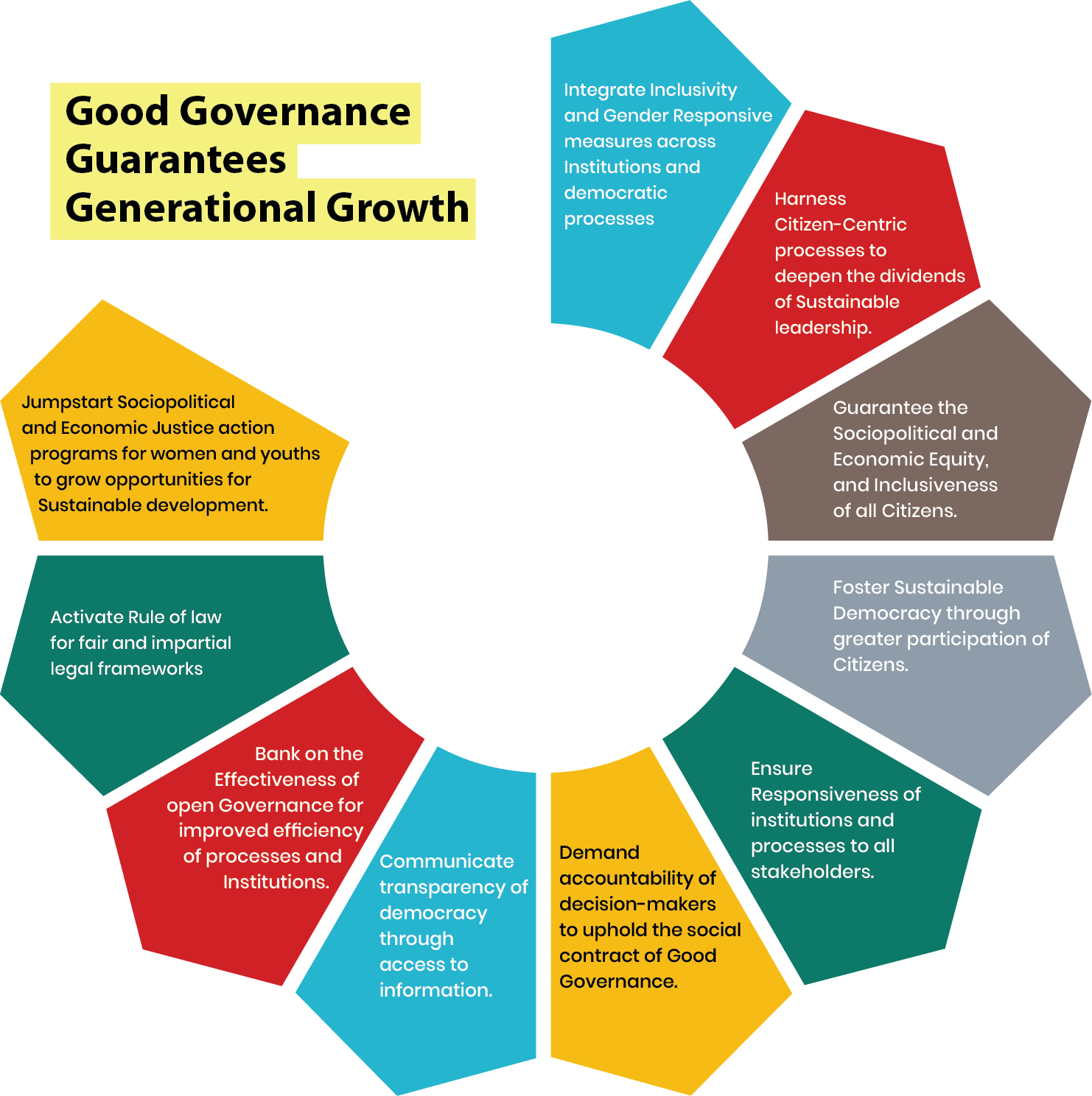
Good Governance is widely recognized as a critical tool for advancing sustainable development and it is also considered a crucial element to be incorporated in development strategies.


Good Governance promotes Accountability, Transparency, Efficiency and Rule of Law at all levels and allows efficiency management of Human, Natural, Economic and Financial Resources for equitable and sustainable development, guaranteeing civil society participation in decision-making processes.


Good Governance and sustainable development are two concepts intimately tied together. Good governance supports Sustainable Development; and its absence severely limits it and can, at worst, impede it.

GIGGA Citizen

Impact Outcomes

greenmeiretifund3 (1)

Call for Applications $200,000 GreenMeIRETI Fund for Green Economy & Climate Action Innovators.

Call for Applications $200,000 GreenMeIRETI Fund for Green Economy & Climate Action Innovators.

Context:

Africa urgently needs a green shift due to the complex and pressing environmental, social, and economic challenges the continent faces. A green shift refers to a transition towards sustainable practices that promote environmental protection, resource conservation, and renewable energy adoption. The continent faces a unique set of challenges and opportunities that demand a swift and sustainable transformation:

  • Climate Change and Vulnerability: Africa is disproportionately affected by climate change, with rising temperatures, extreme weather events, and droughts threatening food security and exacerbating poverty. A green shift can mitigate greenhouse gas emissions, enhance climate resilience, and protect vulnerable communities from climate-related disasters.
  • Biodiversity Conservation: Africa boasts diverse ecosystems and unique wildlife, but rampant deforestation, habitat destruction, and illegal poaching endanger these treasures. Embracing green practices can help preserve biodiversity, maintain ecosystem balance, and protect endangered species.
  • Sustainable Agriculture: Agriculture is the backbone of many African economies, but conventional practices contribute to soil degradation, water scarcity, and pollution. Adopting agroecological methods, promoting organic farming, and investing in climate-smart technologies can ensure food security while safeguarding natural resources.
  • Energy Access and Efficiency: Millions of Africans lack access to electricity, relying on fossil fuels and traditional biomass for energy needs. A green shift can accelerate the adoption of renewable energy sources like solar, wind, and hydroelectric power, increasing energy access and reducing greenhouse gas emissions.
  • Economic Opportunities: The green economy presents vast opportunities for job creation and economic growth in Africa. Investing in renewable energy infrastructure, eco-tourism, and green technologies can generate employment and foster sustainable development.
  • Water Management: Water scarcity is a major concern across the continent, impacting agriculture, health, and sanitation. Implementing water-saving measures, improving water quality, and adopting sustainable water management practices can alleviate water stress.
  • Health and Pollution: Air and water pollution in African cities contribute to numerous health problems, including respiratory diseases and waterborne illnesses. A green shift can reduce pollution levels, promoting better public health outcomes and reducing healthcare costs.

A green shift is not only necessary to address Africa's environmental challenges but also pivotal for its social and economic development. By embracing sustainable practices, Africa can protect its natural heritage, improve livelihoods, and build a resilient and prosperous future for its people.

The GreenMeIRETI Fund Call for Applications:
GREENNOV8 Abuja Hackathon for Green Economy & Climate Action Innovators.

Are you passionate about driving positive change for the planet while fostering economic growth? Do you have groundbreaking ideas and innovative solutions to tackle environmental challenges and create a sustainable future? If so, we invite you to apply for the GREENNOV8 Abuja Hackathon for Green Economy & Climate Action Innovators.

The GREENOV8 Abuja Hackathon is an exciting initiative aimed at identifying and supporting visionary individuals and teams who are dedicated to shaping a greener and more sustainable world. It is a Green Economy and Climate Action Innovators Empowerment Program sponsored by the GreenMeIRETI Fund and backed by the Hope2Green Abuja Project (GreenMeIRETI Campaign) which was launched as a part of Senator Ireti Heebah Kingibe’s 2RUHOPE Development Initiative for Sustainable and Inclusive Development in Abuja.

The maiden edition of the Hackathon was designed to commemorate this year’s International Youth Day which will be celebrated globally under the United Nations Theme - Green Skills for Youth: Towards a Sustainable World.

We are seeking passionate innovators from diverse backgrounds, including entrepreneurs, researchers, students, and professionals across the FCT, who have the drive and determination to make a tangible impact on the environment and the realization of a successful and just green transition in Africa.

Selected participants will have the opportunity to access a range of benefits, including mentorship from industry experts, access to funding and resources, networking opportunities, and exposure to potential investors and partners. Through this program, you will gain the necessary support and guidance to turn your green ideas into reality and contribute to building a sustainable and resilient society.

  • • Individuals or teams between the ages of 18-39, from every community in the FCT with innovative solutions related to these five focal thematic green economy sectors - transport, water, energy, waste, and agriculture are encouraged to apply.
  •  
  • • Applicants must demonstrate a clear vision, the potential for sustainability, and a commitment to environmental protection and social responsibility.
  •  
  • • We welcome applications from innovators at various scales, with a preference for projects that are geared towards community-based impact or grassroots-level impact.
The GREENNOV8 Abuja Hackathon runs a social inclusion campaign which is designed to empower specifically youth-led and women-led green innovation solutions.

Ideas, solutions and innovations may touch on any of the 5 thematic sectors previously mentioned across these 20 Priority Solution Areas which include:

  • Energy Efficiency

  • Recycling & Waste Management (Circular Economy)

  • Sustainable Value-Chains & Production

  • Clean Air & Zero SLCPs (Short-Lived Climate Pollutants)

  • Biodiversity Conservation

  • Green Transport

  • Clean Energy

  • Wetland Protection, Ocean Conservation & Sustainable Fisheries Management.

  • Ecolabelling Solutions

  • Waste Oil Management

  • Waste on Electrical & Electronic Equipment (WEEE)

  • Sustainable Agriculture & Land Management

  • Clean Cooking Solutions

  • Ecotourism

  • Noise Pollution

  • Climate Justice.

  • WASH Economy, Water Storage & Conservation.

  • Climate Literacy & Education

  • Climate-Smart Urban Development/ Cities

  • Join us in the journey towards a greener future! Together, we can drive transformative change and create a more sustainable world. Apply now and be a part of a community of innovators contributing towards transformative action for sustainable development in Nigeria.

Application Deadline: November 1st, 2023

To apply or find more information, please visit www.greenmeireti.org

Please Complete and Submit your application no later than the stipulated deadline.

Note: Application portal opens October 1st and closes November 1st, 2023. Only successful applicants will be contacted.

Days
Hours
Minutes
Seconds
greenmeiretifund2 (1)

$200,000 GreenMeIRETI FUND LAUNCH

Senator Ireti Kingibe Launches $200,000 (Usd) Green Economy & Climate Action Impact Investment Fund (Greenmeireti Fund) To Commemorate The 2023 International Youth Day.

National and local economies globally, continue to experience multiple socioeconomic shocks arising from and resulting in an exacerbation of rising costs of living, unemployment, inequality, climate-related emergencies, among other challenges that exist in our world today. We have witnessed youths consistently rise up to the occasion with monumental contributions towards global economic recovery.

Attaining socioeconomic sustainability in these times is predicated on a just green transition. With a proven track record of substantial development contributions, investing in youth-led solutions presents a viable opportunity for measurable progress.

This year’s global Youth Day observance is themed Green Skills for Youth: Towards a Sustainable World. With a focus on highlighting the role of young people in coming together to amplify engagement and leadership in all areas of decision making and action, especially in creating an environmentally sustainable and climate friendly world. It also marks the 25th anniversary of the UN resolution proclaiming August 12th as the International Youth Day.

The GreenMeIRETI Fund has been established in celebration and recognition of the vital and invaluable role of youths in the actualization of sustainable development.

The GreenMeIRETI (GMI) Fund is the first Green Economy & Climate Action Impact Investment Fund in the world, mobilized and sponsored by a sitting member of a National Parliament. The GreenMeIRETI Fund is a strategic response by Senator Ireti Kingibe’s 2RUHOPE Development Initiative to both the urgency for climate action in the African region, and also the Inter-Parliamentary Union’s (IPU) ‘Parliaments for the Planet’ Campaign – which calls on every Parliamentary Representative across the globe to become an active champion for climate action and a just green transition.

With a pledged $200,000 (USD), the GreenMeIRETI Fund is a strategic Green Impact Investment Fund positioned to play a vital role in accelerating the transition towards a greener and more sustainable economy. The fund serves as a catalyst for green innovation and technology.

By providing financial support to youth and women-led sustainability and green growth-oriented startups and projects, it encourages the development of cutting-edge solutions to environmental problems. These innovations are expected to contribute towards the boost of more efficient renewable energy sources, sustainable agricultural practices, and advancements in waste management, among others.

Investors are increasingly recognizing the importance of environmental, social, and governance (ESG) factors in their decision-making. By supporting green initiatives and enabling responsible investment practices., the GreenMeIRETI Fund sets an example for other investment vehicles, encouraging a shift towards more environmentally conscious and sustainable investments across the financial landscape.

The GreenMEIRETI Fund promotes job creation and economic growth. As green projects and businesses receive funding, they expand and create employment opportunities in the green economy. This, in turn, contributes to the overall economic growth and societal well-being.

With a focus on financing projects aligned with global and regional targets of the Paris Agreement and the African Union Climate Change and Resilient Development Strategy, the GreenMeIRETI Fund is situated to facilitate the achievement of Nigeria’s Nationally Determined Contributions (NDCs), and empower grassroots-based, impact-oriented MSMEs through the disbursing of Impact Investment Grants.

As a powerful tool to drive sustainable development, spur green innovation and combat climate change, the GreenMeIRETI Fund is structured to run a two-pronged impact investment track for youth-led and women-led eco-innovation solutions, providing an Impact Investment Grant of $5,000 to each selected awardee in both tracks (youth-driven and women-driven).

By mobilizing capital towards environmentally beneficial projects, this fund serves as a force for positive change, leading the way towards a greener and more resilient nation.

To apply or find more information, please visit www.greenmeireti.org

application-form-employment-document-concept (2) (1)

Call for Applications: Special Indigenous Community Engagement Liaisons.

Call for Applications: Special Indigenous Community Engagement Liaisons.

The International Day for the World’s Indigenous People is marked on August 9th every year. It is a day set aside to encourage the protection and promotion of the rights of indigenous peoples, as well as celebrate these communities and their knowledge.

Indigenous Peoples represent the greater part of the world’s cultural diversity. They speak an overwhelming majority of the world’s estimated 7,000 languages and represent 5,000 different cultures. While indigenous peoples are recognized as the stewards of the major part of the world’s biological, cultural and linguistic diversity, they remain a disproportionately underrepresented and marginalized segment of society.

This year’s observance prioritizes three (3) crosscutting focal areas - Climate Action and the Green Transition, Mobilizing for Justice and Intergenerational connections, constituting the theme Indigenous Youth as Agents of Change for Self-determination.

Among these three focal areas, intergenerational connection plays a pivotal role regardless of the challenge of the day, in promoting shared and sustainable progress across indigenous communities.

Intergenerational connection is crucial for advancing indigenous communities’ rights and enabling inclusive development. By sharing traditional knowledge, wisdom, and cultural values across generations, a resilient continuum is formed, enriching community identity and self-determination. This connection empowers youth with ancestral insights while elders benefit from fresh perspectives, ensuring holistic decision-making and sustainable progress. Resulting in a synergy which ensures sustainable practices, preserves indigenous identity, and addresses modern challenges. By bridging generations, indigenous communities fortify their voice, amplify advocacy, and collaboratively craft holistic strategies, safeguarding rights and enabling inclusive development that respects heritage while embracing progress.

In line with the recognition that increased representation and participation of Indigenous communities is crucial for inclusive development, we are pleased to announce the Special Indigenous Community Engagement Liaison Program of Senator Ireti Kingibe’s 2RUHOPE Development Initiative.

The Indigenous Community Engagement Liaison acts as a point of contact, advocate, and ambassador to ensure that development activities and programs align with the interests and aspirations of the community.

There are nine (9) ethnic tribes that collectively constitute the indigenous people of the Federal Capital Territory - Amwamwa, Bassa, Egbira, Gade, Ganagana, Gbagyi, Gbari, Gwandara, and Koro. The Special Indigenous Community Engagement Liaison Program seeks to select a total of 27 representatives (liaisons), three (3) from each indigenous community, who will play a crucial role in facilitating effective communication, collaboration, and understanding between indigenous communities and external stakeholders.

This role is primarily focused on bridging cultural gaps, building relationships, and ensuring that indigenous perspectives, knowledge, and interests are respected and integrated into decision-making processes. The liaison acts as a vital link between the indigenous community and the wider world, advocating for the community's needs, concerns, and rights.

  • Indigenous Youth Community Engagement Liaison.
  •  
  • Indigenous Women Community Engagement Liaison
  •  
  • Indigenous Elders Community Engagement Liaison

  • Strong cultural competence and understanding of indigenous history, culture, and issues.
  •  
  • Excellent communication, negotiation, and mediation skills.
  •  
  • Ability to build and maintain relationships with diverse stakeholders.
  •  
  • Knowledge of relevant legal frameworks, policies, and regulations related to indigenous rights and engagement.
  •  
  • Empathy, patience, and respect for diverse perspectives.
  •  
  • Experience in community engagement, project management, or advocacy is preferred.
  •  
  • Proficiency in local indigenous languages, if applicable, can be a significant asset.
  •  

    1. Cultural Bridge:
    Serve as a cultural bridge between the indigenous community and external stakeholders.

    Understand and respect the cultural, social, and historical context of the indigenous community, ensuring that interactions are culturally sensitive and appropriate.

    1. Community Advocacy:

    Advocate for the indigenous community's rights, interests, and concerns within external organizations or projects.

    Ensure that the voices and perspectives of the indigenous community are heard and considered in decision-making processes.

    1. Relationship Building:

    Build and maintain strong relationships with members of the indigenous community, fostering trust and open communication.

    Establish connections with external stakeholders, including government agencies, NGOs, businesses, and other relevant entities.

    1. Communication Facilitation:

    Facilitate communication between the indigenous community and external organizations, ensuring that information is effectively shared and understood.

    Translate technical or complex information into culturally appropriate terms for the community, and vice versa.

    1. Cultural Competence:

    Educate external stakeholders about indigenous culture, history, and values, promoting understanding and respect.

    Provide guidance to external parties on engaging with the indigenous community in a culturally sensitive manner.

    1. Project Collaboration:

    Collaborate with external organizations on projects that impact or involve the indigenous community.

    Help design projects that align with the needs and aspirations of the community, promoting sustainable and mutually beneficial outcomes.

    1. Conflict Resolution:

    Address conflicts or misunderstandings that may arise between the indigenous community and external parties.

    Mediate disputes and find common ground through effective communication and negotiation.

    1. Capacity Building:

    Identify opportunities for capacity building within the indigenous community, empowering them to engage more effectively with external stakeholders.

    Provide resources, training, and support to community members to enhance their participation in decision-making processes.

    1. Cultural Preservation:

    Work to preserve and protect indigenous cultural heritage, advocating for the safeguarding of traditional practices, languages, and sacred sites.

    1. Reporting and Documentation:

    Maintain accurate records of interactions, meetings, and agreements between the indigenous community and external stakeholders.Prepare reports that highlight progress, challenges, and opportunities for collaboration

The mandate of an Indigenous Community Engagement Liaison is multifaceted, requiring a deep understanding of both indigenous cultural contexts and external stakeholder dynamics. By acting as a bridge between the two, this role helps ensure that indigenous communities are respected, heard, empowered, and that they have a meaningful voice in decisions that affect their lives and territories, contributing to more equitable and sustainable outcomes for all.

Application Deadline: November 1st, 2023

To apply or find more information, please visit www.2ruhope.org or www.senatoriretikingibe.com

Please Complete and Submit your application no later than the stipulated deadline.

Note: Application portal opens October 1st and closes November 1st, 2023. Only successful applicants will be contacted.

Days
Hours
Minutes
Seconds
group-african-friends-head-head-smile-together-happiness-friendship-concept-photo-from (2)

Announcing the Launch of the FCT Special Indigenous Community Liaison Program.

Senator ireti kingibe launches special indigenous community engagement liaison program to commemorate international day for the world’s indigenous people 2023.

The International Day for the World’s Indigenous People is marked on August 9th every year. It is a day set aside to encourage the protection and promotion of the rights of indigenous peoples, as well as celebrate these communities and their knowledge.

Indigenous Peoples represent the greater part of the world’s cultural diversity. They speak an overwhelming majority of the world’s estimated 7,000 languages and represent 5,000 different cultures. While indigenous peoples are recognized as the stewards of the major part of the world’s biological, cultural and linguistic diversity, they remain a disproportionately underrepresented and marginalized segment of society.

This year’s observance prioritizes three (3) crosscutting focal areas - Climate Action and the Green Transition, Mobilizing for Justice and Intergenerational connections, constituting the theme Indigenous Youth as Agents of Change for Self-determination.

Among these three focal areas, intergenerational connection plays a pivotal role regardless of the challenge of the day, in promoting shared and sustainable progress across indigenous communities.

Intergenerational connection is crucial for advancing indigenous communities’ rights and enabling inclusive development. By sharing traditional knowledge, wisdom, and cultural values across generations, a resilient continuum is formed, enriching community identity and self-determination. This connection empowers youth with ancestral insights while elders benefit from fresh perspectives, ensuring holistic decision-making and sustainable progress. Resulting in a synergy which ensures sustainable practices, preserves indigenous identity, and addresses modern challenges. By bridging generations, indigenous communities fortify their voice, amplify advocacy, and collaboratively craft holistic strategies, safeguarding rights and enabling inclusive development that respects heritage while embracing progress.

In line with the recognition that increased representation and participation of Indigenous communities is crucial for inclusive development, we are pleased to announce the Special Indigenous Community Engagement Liaison Program of Senator Ireti Kingibe’s 2RUHOPE Development Initiative.

The Indigenous Community Engagement Liaison acts as a point of contact, advocate, and ambassador to ensure that development activities and programs align with the interests and aspirations of the community.

There are nine (9) ethnic tribes that collectively constitute the indigenous people of the Federal Capital Territory - Amwamwa, Bassa, Egbira, Gade, Ganagana, Gbagyi, Gbari, Gwandara, and Koro. The Special Indigenous Community Engagement Liaison Program seeks to select a total of 27 representatives (liaisons) - three (3) from each indigenous community, who will play a crucial role in facilitating effective communication, collaboration, and understanding between indigenous communities and external stakeholders.

This role is primarily focused on bridging cultural gaps, building relationships, and ensuring that indigenous perspectives, knowledge, and interests are respected and integrated into decision-making processes. The liaison acts as a vital link between the indigenous community and the wider world, advocating for the community's needs, concerns, and rights.

The mandate of an Indigenous Community Engagement Liaison is multifaceted, requiring a deep understanding of both indigenous cultural contexts and external stakeholder dynamics. By acting as a bridge between the two, this role helps ensure that indigenous communities are respected, heard, empowered, and that they have a meaningful voice in decisions that affect their lives and territories, contributing to more equitable and sustainable outcomes for all.


For more information, please visit www.2ruhope.org or www.senatoriretikingibe.com